

Development of an Educational Organization: Influence of the Management Team on the Result

https://doi.org/10.54884/1815-7041-2025-82-1-143-152
Abstract
The article shows that nowadays sustainable strategic development of the management team is ensured in a comprehensive way and is consolidated in the processes of organizing activities for the sovereignty of the education system. The author highlights the criteria for evaluating the effectiveness of management teams, which include personal responsibility for the result, consistency, highly effective interaction, sustainability, flexibility, etc. The article presents the results of research aimed at evaluating the performance of the management team within the framework of the project “School of the Ministry of Education of Russia”. The data of self-diagnosis of educational institutions are also presented. The research covers all the main areas and conditions of the School of the Ministry of Education of Russia initiative, including education, creativity, knowledge, career guidance, health, the role of the teacher, the school team, the atmosphere in the educational institution and the educational environment. Additional professional development programs created in co-authorship have confirmed their effectiveness in improving the professional competencies of management teams.
About the Author
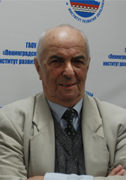
M. Lazareva
St. Petersburg University of Management Technologies and Economics
Russian Federation
Russian Federation
Marina V. Lazareva, Candidate of pedagogical sciences, Associate professor
Department of Pedagogy and Psychology
St. Petersburg
References
1. Apenko, S. N., Efimova, G. Z., Semenov, M. Yu. (2023). Formation and development of teams of strategic university transformation projects: methodological approaches. Education and Science, no. 25, pp. 37–69. DOI: 10.17853/1994-5639-2023-4-37-69. (In Russ.)
2. Filonovich, S. R. (2007). Leadership as an integral problem of behavioral sciences. Russian Journal of Management, no. 5, pp. 91–100. (in Russ.)
3. Panasyuk, V. P. (2017). Education and educational system management: status, trends, problems and prospects. Education and Science Journal, no. 2, pp. 72–88. DOI: 10.17853/1994-5639-2017-2-72-88. (In Russ.)
4. Kudelina, O. V. (2016). Model of competencies of the head of a health care organization: international experience in implementing distributed leadership competencies. Russian Journal of Management, no. 14, pp. 81–104. DOI: 10.21638/11701/spbu18.2016.404. (In Russ.)
5. Bordunos, A. K., Kosheleva, S. V. (2018). Freedom of choice in human resource man agement strategy: Limitations and opportunities. Vestnik of Saint Petersburg University. Management, no. 17, pp. 499–546. DOI: 10.21638/11701/spbu08.2018.403. (In Russ.)
6. Lazareva, M. V., Gubanova, E. V. (2022). Support of professional development of managerial staff of educational organizations. SPb.: SPbUTU&E. (In Russ.).
7. Khikmetov, A. (2024). Transformation of the team role model of scientific schools into a Markov chain. Procedia Computer Science, no. 231, pp. 379–384. DOI: 10.1016/j.procs.2023.12.221.
Review
For citations:
Lazareva M. Development of an Educational Organization: Influence of the Management Team on the Result. Man and Education. 2025;(1):143-152. (In Russ.) https://doi.org/10.54884/1815-7041-2025-82-1-143-152
Views:
479
JATS XML


 Email this article