

Designing personnel policy of educational organization in the context of the sovereignty of national education

https://doi.org/10.54884/1815-7041-2025-84-3-43-54
Abstract
The article presents the results of the analysis of a set of research and experience in the use of technologies and tools for personnel management in education, which have become the basis for developing an approach to designing personnel policy in the context of the sovereignty of domestic education. The work covers the period 2020-2025, uses theoretical and empirical methods, as well as modeling and design methods. The set of conducted studies included the pilot testing of personnel management tools in 27 educational institutions across. More than 1600 teachers and heads of the education system became participants. The relevance of the topic of designing personnel policy in the context of the sovereignty of domestic education has led to the development and implementation of an additional professional development program «Formation of personnel policy of an educational organization». The key components of the program content correspond to the logic of designing personnel policy at the level of an educational organization (with the possibility of using at municipal and regional levels), contributing to the formation of the teaching staff capable of solving modern educational problems. The practical significance of the work lies in the fact that the proposed approaches, technologies and tools tested in practice, have proven their effectiveness and can be recommended for use in the practice of management in the education system.
Keywords
personnel policy,
organizational culture,
pedagogical values,
teaching staff,
sovereignty of national education
Supporting agencies: The author expresses sincere gratitude to the Russian Academy of Education for comprehensive support and the opportunity to test and scale the results, as well as to the experts for reviewing the work.
About the Author
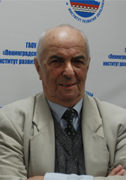
S. V. Kamka
Ural Federal University
Russian Federation
Russian Federation
Svetlana V. Kamka – Cand. Sci. (Education), Assoc. Prof., Department of Pedagogy
Yekaterinburg
References
1. Klyachko, T.L. & Tokareva, G.S. (2024). Assessment of redundancy / insufficiency of qualifications of young specialists: review of Russian experience. In: Vocational Education and Labour Market, no. 12(3), pp. 32–52. (In Russ.)
2. Doroshenko, N.N. (2021). Methodological basis for forming strategies development of education as an object of socio-economic systems in the conditions of sustainable development of personnel policy. In: Hypothesis, no. 4(17), pp. 41–47. (In Russ.)
3. Efimov, A.V. & Tikhonovskova, S.A. (2022). Technological sovereignty of Russia in the context of strategic goals for the development of the regional economy. In: Drucker Bulletin, no. 4(48), pp. 165–172. (In Russ.)
4. Narozhnaya, D.A. (2024). Employee Retention as a Priority for Russian Companies in 2024. In: Public Administration. E-journal (Russia), no. 105, pp. 53–64. (In Russ.)
5. Smolin, O.N. (2023). Scientific, technological and educational policy at the turn of the epochs: new challenges. In: Svobodnaya Mysl, no. 5(1701), pp. 19–40. (In Russ.)
6. Solovyova, O.V., Slepova, A.A. & Zemlyakova, P.V. (2022). School education as a factor in the development of the human potential of the region. In: Economy and Management: Problems, Solutions, no. 6, pp. 164–169. (In Russ.)
7. Medvedeva, Yu.V. (2024). Analysis of problems of professional development of integral pedagogical collectives of schools in conditions of ensuring worldview and technological sovereignty. In: International Journal of Humanities and Natural Sciences, no. 97, pp. 108–116. (In Russ.)
8. Kamka, S.V. & Nikolenko, O.I. (2021). Andragogical Approaches to the Formation of Further Professional Education Programs for Teachers. In: Pedagogical Education in Russia, no.3, pp. 136–143. (In Russ.)
9. Karamnova, N.V. & Kombarov, V.V. (2022). Improving the personnel policy of an educational institution. In: Science and Education, no.3. (In Russ.)
10. Miniurova, S.A. (2025). Current practices of solving the problem of shortage of teaching staff in the context of modern realities: the project “professionalism” in the field of pedagogy. In: Izvestia of the Russian Academy of Education, no. 1(69), pp. 197–204. (In Russ.)
11. Kalyugina, S.N., Karamysheva, D.B. & Larionova, N.A. (2023). Research of the problems of the personnel potential of the regions of the Russian Federation. In: Russian Studies in Law and Politics, no. 1, pp. 35–56. (In Russ.)
12. Basyuk, V.S. (2021). Formation of students’ functional literacy as an important aspect of achieving personal learning outcomes. In: Domestic and Foreign Pedagogy, no. 1(6), pp. 32–42. (In Russ.)
13. Vasilyeva, O.Yu., Basyuk, V.S. & Kazakova, E.I. (2022). Traditional Values in Contemporary Russian Teacher Education. In: Lomonosov Pedagogical Education Journal, no. 4, pp. 5–17. (In Russ.)
14. Gulyuk, L.A. State Educational Policy: Value-target Guidelines of a Modern Teacher / L.A. Gulyuk, I.V. Golovina, A.K. Krupchenko, T.Yu. Medvedeva, Kh-A. S. Khalatov. In: Municipal Education: Innovations and Experiment, no. 4(91), pp. 13–20. (In Russ.)
15. Bondarevskaya, E.V. (2001). Meanings and Strategies of Personality-Oriented Education. In: Pedagogy, no. 1, pp. 17–24. (In Russ.)
16. Milyaeva, L.G. (2023). Attributive and comprehensive approaches to the diagnosis of the type of personnel policy. In: Bulletin of the University of the Russian Academy of Education, no. 2, pp. 117–126. (In Russ.)
17. Sklyarova, T.V., Bityanova M.R. (2017). In: Values in contemporary school education: the experience of pedagogical design. Monograph. Penza: Religious Organization – Religious Educational Organization of Higher Education “Penza Orthodox Seminary of the Penza Diocese of the Russian Orthodox Church”. (In Russ.)
18. Kamka S.V., Malinnikova T.V., Nikolenko O.I. & Shustova T.N. (2024). Prerequisites for forming new personnel policy through personnel outflow research in the education system. In: Man and Education, no. 3, pp. 9–19. (In Russ.)
19. Yasvin, V.A. (2019). The School Environment as an Object of Measurement: Expertise, Design, Management. Moscow: Public Education. (In Russ.)
20. Bazarov, T.Yu. & Eremina, B.L. (2002). Personnel Management: A Textbook for Universities. Moscow: UNITY. (In Russ.)
Review
For citations:
Kamka S.V. Designing personnel policy of educational organization in the context of the sovereignty of national education. Man and Education. 2025;(3):43-54. (In Russ.) https://doi.org/10.54884/1815-7041-2025-84-3-43-54
Views:
250
JATS XML



 Email this article