

Analysis of key categories in family education: from theoretical understanding to defining basic concepts

https://doi.org/10.54884/1815-7041-2025-85-4-236-245
Abstract
The article is devoted to the analysis and comparison of various approaches to understanding a number of closely related and overlapping concepts associated with family education. Among the categories considered are “family education,” “self-education,” “homeschooling,” “unschooling,” “home learning,” “alternative school,” “family school,” and others. The aim of this study is to identify common features and specific characteristics of these categories' interpretation, detect patterns, and propose its own version of a glossary. Research methods are based on analyzing Russian publications, normative documents, and official materials reflecting contemporary Russian experience in family education. Key findings include identifying fundamental distinctions between the categories, defining boundaries of their intersection and interaction, as well as offering solutions to address the problem of terminological ambiguity by compiling a specialized glossary that can serve as a foundation for further development of educational and regulatory documents in the field of family education.
About the Author
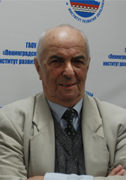
M. N. Ezhikova
Tyumen State Institute for Development of Regional Education
Russian Federation
Russian Federation
Maria N. Ezhikova – the Academic Director of Queen’s English School, postgraduate student
Tyumen
References
1. Belousov, K.Yu. and Yashina, M.N. (2016) Development of family education in Russia. Society: Sociology, Psychology, Pedagogy, no. 1, 62–65. (In Russ.)
2. Volkova, V.V. and Korovyakovskiy, D.G. (2019) Unschooling as a modern form of education: history, foreign experience and possibilities for application in Russia. Innovative Projects and Programs in Education, no. 6 (66), 46–56. (In Russ.)
3. Gil'midinova, T.V. (2023) Additional education of children as an environment for general education within the framework of family learning. zvestia of Russian State Pedagogical University named after A.I. Herzen, no. 209, 65–72. (In Russ.)
4. Romanenko, S.N. and Denisova, E.A. (2022) Features of organization of school-type family education. Theory and Methods of Teaching and Upbringing (by Areas). Pedagogical Forum, no. 1 (9), 31–36.
5. Matveyeva, S.A. and Akhmetzyanov, D.R. (2021) Home schooling instead of school: how will it affect child development? Pedagogical Education: New Challenges and Goals: Collection of scientific papers from the VII International Forum on pedagogical education, part IV, 299–304. (In Russ.)
6. Bratchikova, A.B., Mikhal'kova, O.A. and Dektyarev, I.I. (2020) Features of home learning. Cronos, no. 5 (43), 27–29. (In Russ.)
7. Glikman, I.Z. (2014) In defense of schools against unschooling. Public Education, no. 7 (1440), 34–40. (In Russ.)
8. Koshchienko, I.V. and Pokrovskaya, L.I. (2015) Family education as a variable form of learning. Knowledge. Understanding. Skill, no. 4, 187–193. (In Russ.)
9. Budanova, D.V., Shcherbina, D.E. and Toletova, M.K. (2023) Homeschooling along individual educational route. Chemistry at School, no. 9, 44–46. (In Russ.)
10. Petryaeva, E.Yu., Sumenkova, Yu.I., Fedorovskaya, M.N. and Kozinchenko, I.V. (2024) Family education in the Russian Federation: analysis of official statistics data. Bulletin of Moscow City Pedagogical University. Series: Pedagogy and Psychology, no. 2, 67–82. (In Russ.)
11. Petryaeva, E.Yu. (2023) Alternative school education: approaches to defining the concept. Society: Sociology, Psychology, Pedagogy, no. 12, 131–138. (In Russ.)
12. Mingazov, I.F., Yarkova, T.A., and Milovanova, N.G. (2019) Models and experiences of organizing family education. Bulletin of Nizhnevartovsk State University, no. 4, 102-109. (In Russ)
13. Antuf'eva, M.P. (2019) The concept of “Family Education” in Russia and USA: comparative analysis. MNKO, no. 5 (78), 164–165. (In Russ.)
14. Gladkikh, V.G. and Mazhitova, D.Z. (2022) Historiography of priority of modern alternative education. Bulletin of Orenburg State University, no. 3 (235), 79–86. (In Russ.)
15. Ostapenko, A.A. (2021) Family schools as criticism of the system. Public Education, no. 3 (1486), 50–56. (In Russ.)
16. Skvortsov, A.V. (2019) Modern Orthodox school of family type: advantages, problems and role in personality development. Orthodoxy and Spiritual-Moral Formation of Contemporary Personality: Materials of the VIIIth Pyukhtitsa Readings International Scientific-Practical Conference, 382–385. (In Russ.)
17. Garashchenko, L.V. (2017) A.E. Tretyakova and her “Family School” in Irkutsk. Pedagogical Image, no. 1 (34), 5–13. (In Russ.)
18. Gavrilushkina, O.P. (2010) Child is lagging behind in development? Family school. Moscow: Drofa Publ. (In Russ.)
19. Davidenko, T.V. (2022) Impact of school-type family education on child’s personality development. Theory and Practice of Social Development in Light of Modern Scientific Knowledge: Proceedings of the V International Scientific Conference, 100–103. (In Russ)
20. Kornetov, G.B. (2019) Alternative schools and alternative education in domestic pedagogical tradition: early 21st century. Innovative Projects and Programs in Education, no. 2 (62), 31–40. (In Russ)
Review
For citations:
Ezhikova M.N. Analysis of key categories in family education: from theoretical understanding to defining basic concepts. Man and Education. 2025;(4):234-243. (In Russ.) https://doi.org/10.54884/1815-7041-2025-85-4-236-245
Views:
85
JATS XML



 Email this article